

PRP Therapy
A concentrated portion of your own blood, injected where your body needs help repairing itself. Used for stubborn joint and tendon pain, and for skin and hair restoration.
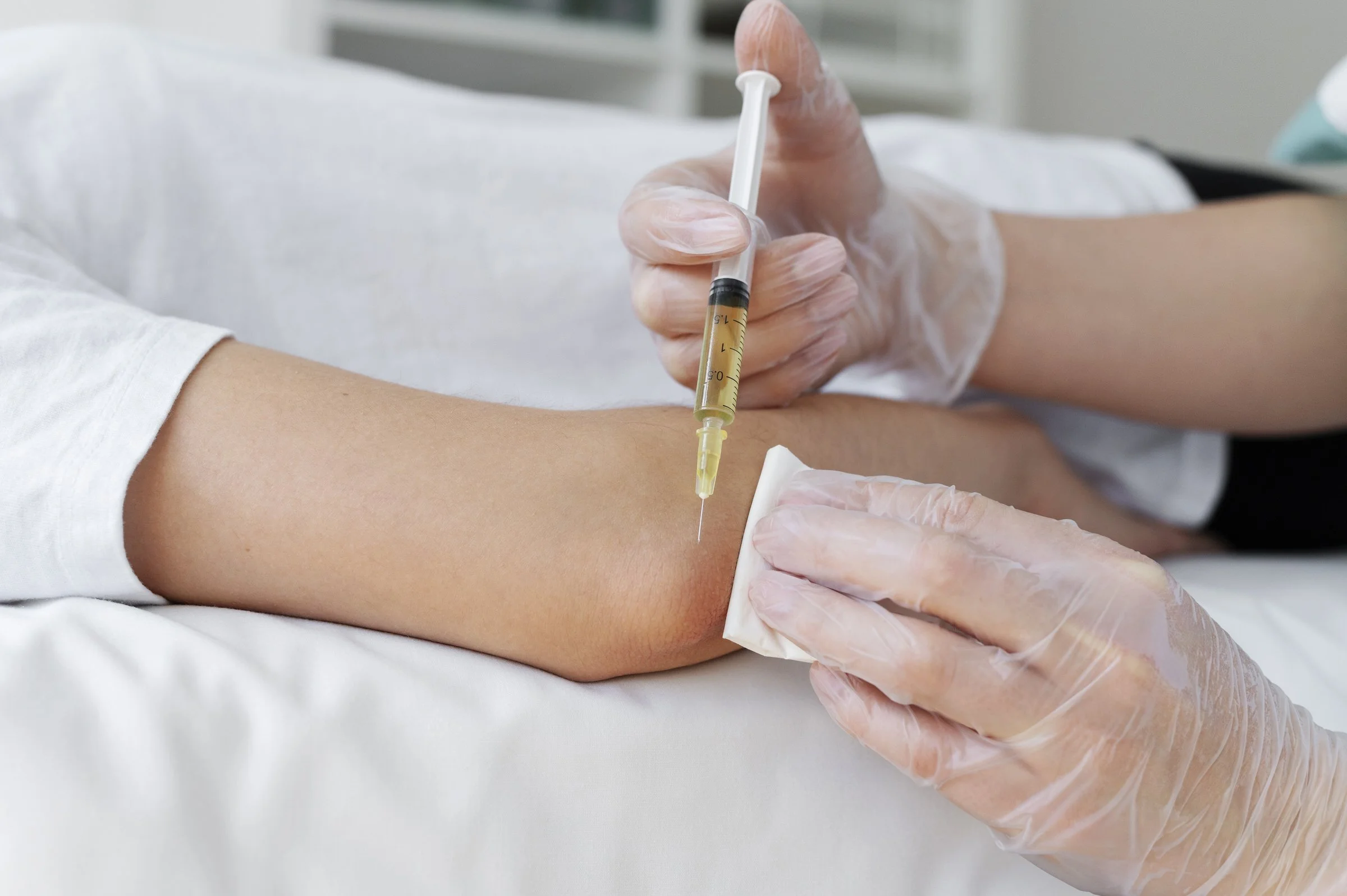
The same blood you came in with, concentrated.
Platelet-rich plasma starts with a small blood draw, the same as any routine lab. That sample is spun in a centrifuge, which separates out a concentrated layer of platelets and the growth factors they carry. Those growth factors are part of how your body already repairs injured tissue. Concentrating them and placing them directly into the problem area gives that process a stronger signal in one spot. Nothing synthetic is added. The entire treatment uses material that came from you, which is why PRP is often considered for patients who want to avoid steroids or are not candidates for other injectables.
Most patients come to us for PRP after an overuse injury or a tendon problem that has not settled with rest, bracing, or physical therapy. Knees, shoulders, elbows, hips, ankles, and the plantar fascia are the areas we treat most often. The same concentrate is also used in aesthetic and restorative care, where it may support collagen production, improve skin texture, and encourage hair growth in cases of thinning. Whether PRP is the right approach depends on what is actually causing your symptoms, which is why an in-person evaluation comes before anything is scheduled.
Improvement is gradual by design. Soreness in the first few days is normal and usually a sign the process has started. Because regenerative injections are frequently classified as elective, coverage varies, and we will review your benefits and give you the cost before your first treatment. Schedule an evaluation and we will tell you honestly whether PRP fits.
Common Treatments
Knee osteoarthritis · Rotator cuff · Tennis elbow · Achilles tendinopathy · Patellar tendinopathy · Plantar fasciitis · Chronic ankle sprain · Hair thinning · Acne scars · Skin texture and tone
Treatment Facts
Appointment length: 45 to 60 minutes, including the blood draw and preparation
Results appear: Gradually. Usually 4 to 12 weeks for joints and tendons, and 3 to 6 months for skin and hair
Downtime: Minimal. One to three days of soreness is common, and anti-inflammatory medication is typically paused around treatment
Frequency: 1 to 3 sessions for joints and tendons, spaced 4 to 6 weeks apart. Hair and skin treatment is usually a series, followed by maintenance