
Cognitive & Mood
Our Services

Cognitive & Mood
Trouble focusing. A low mood that settled in and stayed. Tiredness that a full night of sleep does not fix. These symptoms are common, they are not imagined, and there is usually a reason behind them worth finding.

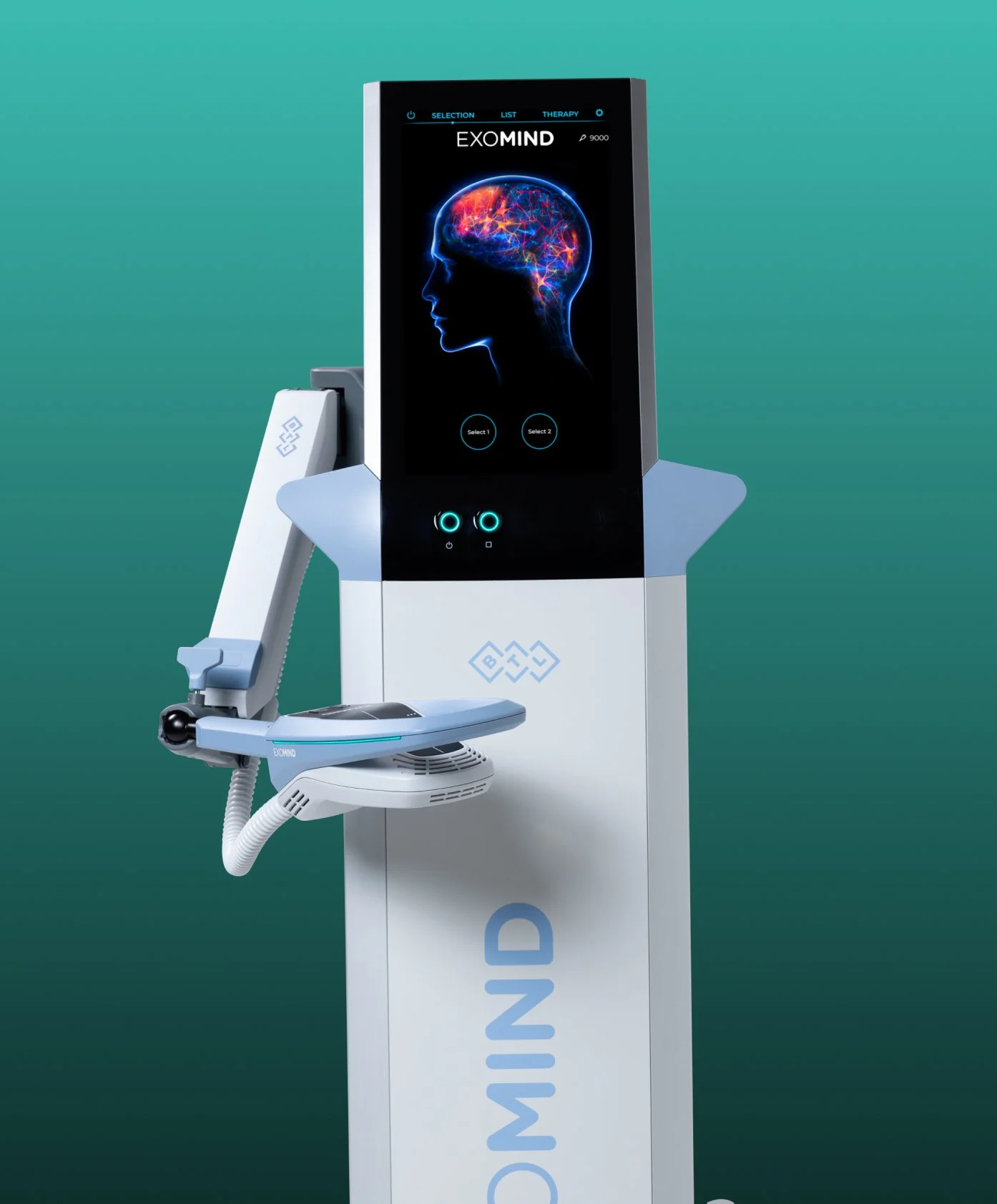
EXOMIND®
A different way to treat depression.
EXOMIND® is a form of transcranial magnetic stimulation, also called TMS. You sit upright in a chair, fully clothed and awake, while gentle magnetic pulses reach the area of the brain that helps regulate mood. No needles, no sedation, no recovery time. Most sessions run under 30 minutes, and most people head straight back to work afterward. Your physician will tell you whether it makes sense for you.
EXOMIND® is a registered trademark of BTL Industries Inc. Device images are used with permission.
Common Treatments
Depression · Low mood · Brain fog · Fatigue · Difficulty concentrating · Low motivation
Treatment Facts
Appointment length: About 30 minutes
Results appear: Some patients notice changes within the first few weeks
Downtime: None. Most people return to normal activity the same day
Frequency: A typical course is six sessions, scheduled by your physician
If you are having thoughts of harming yourself, call or text 988 to reach the Suicide and Crisis Lifeline, or call 911. Help is available 24 hours a day.
Frequently Asked Questions
Questions worth asking before you book.
Most people reading this page have already tried a few things and want to know whether this is different. If your question is not answered below, call the office and ask.

-
EXOMIND is a non-invasive treatment that uses transcranial magnetic stimulation, or TMS, to reach the part of the brain involved in mood regulation. It is FDA-cleared for the treatment of major depressive disorder. There is no surgery, no anesthesia, and no medication involved. You stay awake and seated the entire time.
-
Most people describe a gentle tapping sensation on the scalp as the pulses are delivered. It is not painful. The sensation usually becomes easier to ignore as the session goes on, and it stops the moment treatment ends. You can drive yourself home afterward.
-
A typical course is six sessions, which is far fewer than older TMS systems require. Your physician sets the schedule after evaluating you, and some patients are advised to continue beyond the initial course. You will know the plan before you start, including what it costs.
-
Do not stop or change any prescription on your own. Bring a full list of your current medications to your first visit. Your physician will review them, coordinate with any prescriber you already see, and decide together with you whether anything should change.
-
Low mood, brain fog, and fatigue rarely travel alone. Sleep, thyroid function, hormones, blood sugar, medications, and chronic conditions can all play a part. Being evaluated by a physician who can order the labs, review the whole picture, and treat what turns up is often faster than being sent from office to office.
-
Then that is what we treat. Your first visit is an evaluation, not a sales appointment. If your fatigue is thyroid-related or your brain fog traces back to a hormone imbalance, that becomes the plan, and EXOMIND may not be part of it.