

Prolotherapy
A dextrose-based injection that prompts your body to rebuild weakened ligaments and tendons. Used for joints that feel loose, unstable, or painful long after the original injury should have healed.
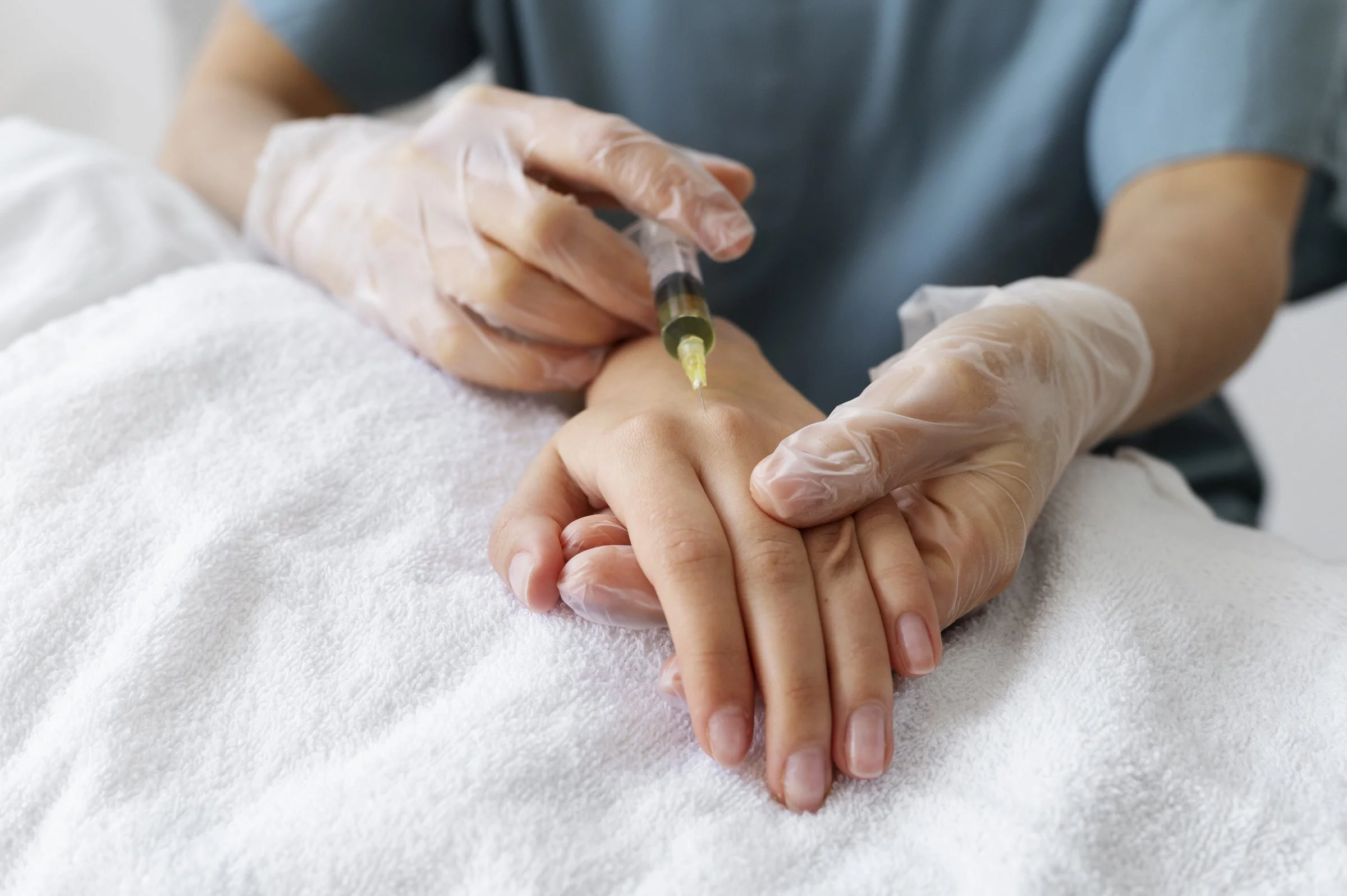
A treatment that uses inflammation instead of shutting it down.
Most injections for joint pain work by quieting inflammation. Prolotherapy does the opposite. A dextrose solution is injected into the weakened ligament, tendon, or joint capsule, which creates a small, controlled irritation at that exact spot. Your body responds the way it responds to any injury, by sending repair signals to the area and laying down new connective tissue. Over a series of treatments, that tissue gradually tightens and strengthens the structures holding the joint together. It is a slower approach than a steroid injection, and it is aimed at the underlying looseness rather than the pain sitting on top of it.
Patients usually find their way to prolotherapy after the standard path has run out. Rest helped for a while. Physical therapy helped for a while. The pain came back, or the joint still gives way on stairs, or a sprain from years ago never quite resolved. We see it most in low backs, knees, shoulders, necks, ankles, and elbows, and in patients with naturally loose joints who injure easily. Whether prolotherapy is the right fit depends on what is actually causing the instability, which is why an in-person evaluation comes before any treatment is scheduled.
Soreness in the first few days is normal and part of how this works. Because prolotherapy is often classified as elective, coverage varies, and we will review your benefits and give you the cost before your first session. Schedule an evaluation and we will tell you honestly whether prolotherapy is worth your time or whether something else fits better.
Common Treatments
Chronic low back pain · Sciatica · Neck pain · Knee pain · Hip pain · Shoulder and rotator cuff injuries · Tennis elbow · Plantar fasciitis · Joint instability · Hypermobility
Treatment Facts
Appointment length: 30 to 45 minutes, depending on how many areas are treated
Results appear: Gradually. Most patients notice change over several weeks, with further improvement across the series
Downtime: Minimal. Soreness and stiffness at the injection site for a few days is expected. Anti-inflammatory medication is typically avoided around treatment
Frequency: A series of 3 to 6 sessions, spaced 3 to 6 weeks apart