

PRF Therapy
A second-generation version of PRP, processed to hold your own growth factors in place and release them slowly. Nothing is added to it. Used for joints, tendons, skin, and hair.
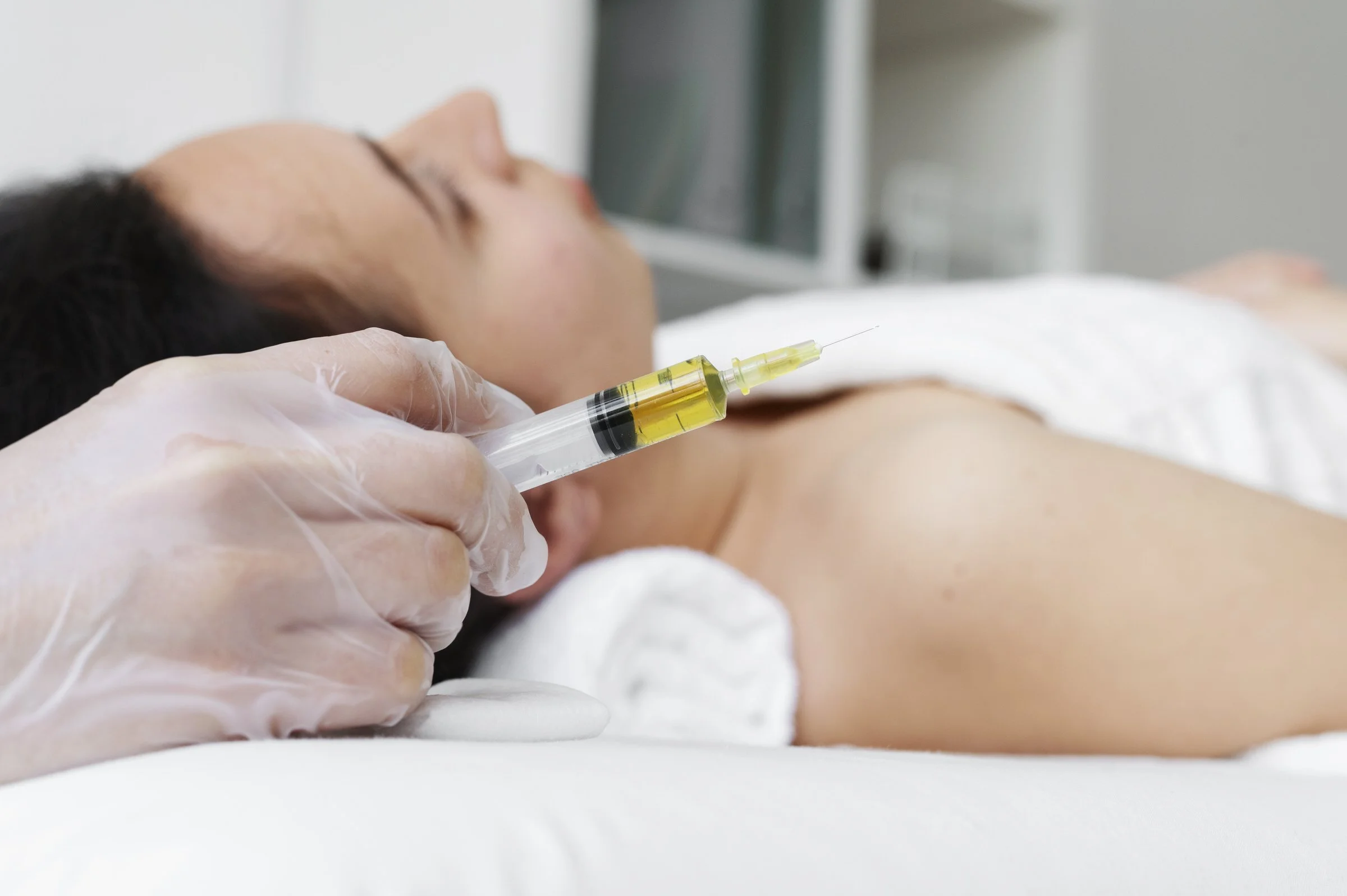
The same starting point as PRP, released more slowly.
PRF starts the way PRP does. A small blood draw, the same as any routine lab, then a spin in a centrifuge to concentrate the platelets and growth factors. The difference is what happens next. The sample is heated and cooled, which forms a fibrin matrix with a gel-like consistency. That matrix acts as a scaffold. Instead of delivering growth factors all at once, it holds them in place and releases them over a longer window. Nothing synthetic is added at any stage. PRF also carries anti-inflammatory properties, which is part of why it is often chosen for tissue that is slow to calm down.
Because nothing is added to it, PRF is an option for patients who cannot use hyaluronic acid fillers or who have autoimmune conditions that rule other injectables out. For pain, we use it in arthritic joints and in tendon or ligament injuries that have not settled with rest or physical therapy. For skin and hair, it may support collagen production, soften fine lines, improve texture, soften the look of under-eye hollows, and encourage growth where thinning has started. PRF is also frequently paired with Emsculpt Neo, microneedling, BioRePeel, EXION Face, and wrinkle relaxers.
Improvement is gradual by design. Most patients need a series of treatments, and results build as your body produces new tissue over the weeks that follow. Mild redness, swelling, or bruising in the first few days is normal. Because regenerative injections are frequently classified as elective, coverage varies, and we will review your benefits before your first treatment. Schedule an evaluation and we will tell you honestly whether PRF fits.
Common Treatments
Osteoarthritis · Chronic joint pain · Tendon and ligament injuries · Fine lines and wrinkles · Acne scars · Under-eye hollows · Facial volume loss · Hair thinning
Treatment Facts
Appointment length: 45 to 60 minutes, including the blood draw and preparation
Results appear: Gradually. Usually 4 to 12 weeks for joints and tendons, and 3 to 6 months for skin and hair
Downtime: Minimal. Mild redness, swelling, or bruising for a few days is common
Frequency: A series of sessions spaced 4 to 6 weeks apart, followed by maintenance